Hi, welcome to your Weekend.
There’s been a lot of bed-wetting down in Southern California this summer about the dangers of the artificial intelligence boom. Maybe bed-wetting isn’t fair: The Hollywood actors who are striking, in part, over how their AI-generated likenesses will be scanned, stored and monetized, have valid concerns. And they certainly can’t trust their studio minders to do right by them.
However, it’s telling that a growing number of celebrities and their estates have already transitioned from AI denial into deal-making. As Julia reports in this week’s cover story, stars and their agents are quietly beginning to take meetings with a number of generative AI startups. These companies are offering stars the chance to claim and license their own digital twins—AI versions of them that could appear in games, marketing, consumer goods and new artistic productions. Some of these companies even promise to fight deepfake fire with fire: One firm Julia highlights, Reimagia, promises to “actively seek out” unauthorized use of clients’ digital likenesses and “issue takedowns on an artist’s behalf.”
The striking actors aren’t wrong to be worried: The brave new world of digital doubles is undoubtedly going to empower bad actors and produce outcomes that could make the Black Mirror episode “Joan Is Awful” look like a true-crime documentary. But it also will carry real upside, and not just for celebrities.
As Julia writes, this is “a case where the experience of famed artists might offer us a peek at our own future." Stars may not live like the rest of us, but by establishing “the contractual language, court decisions and ethical standards” overseeing digital doubles, they may teach us how to defend our own turf in the age of AI.
Now onto this weekend’s stories...
the big read
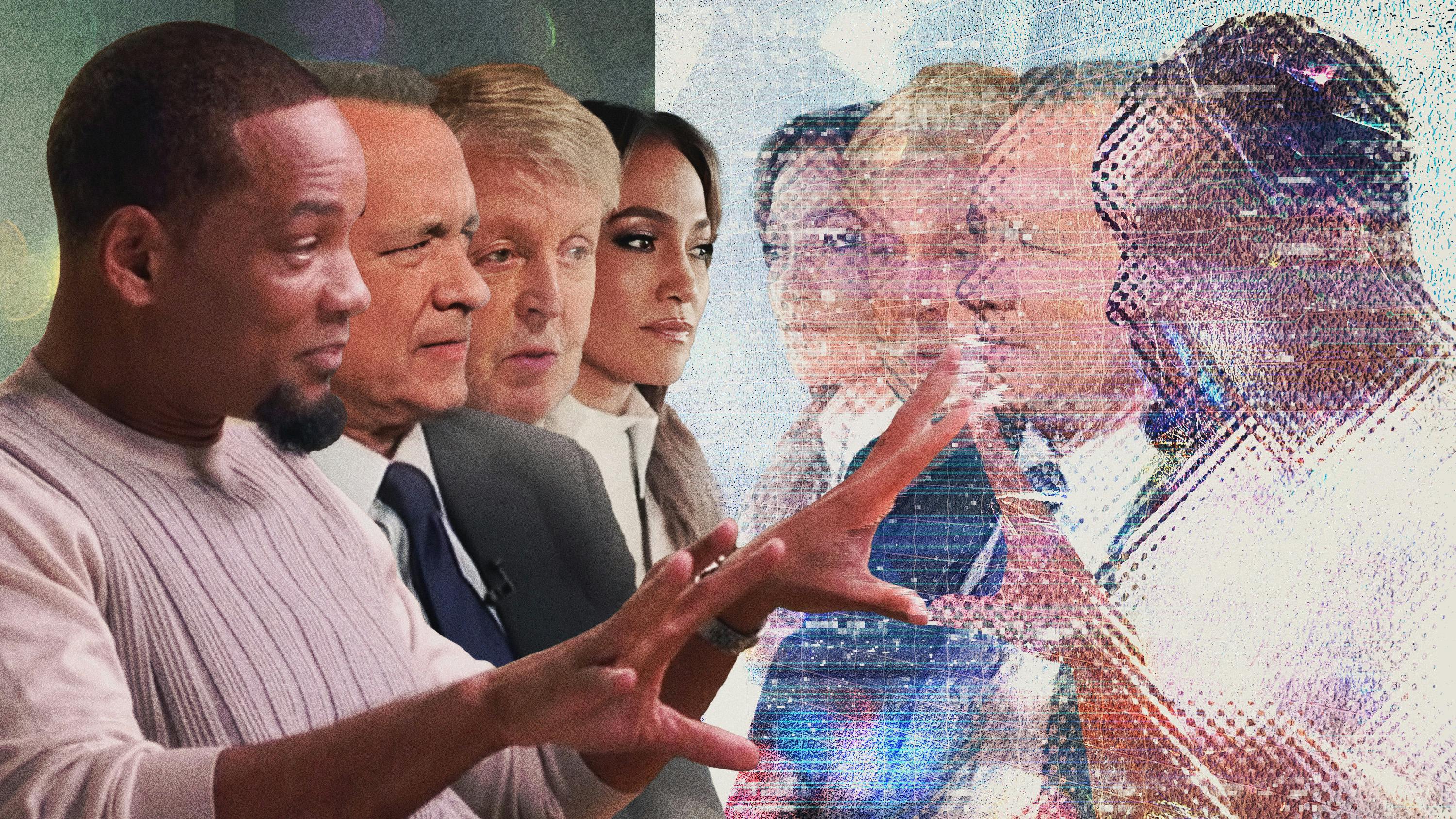
‘Don’t Put Your Head in the Sand’: Stars Are Quietly Inking Deals to License Their AI Doubles
As Hollywood strikes grind on and generative AI companies multiply, celebrities and their estates are mulling their options. Julia takes us inside the world of celebrity digital twins, where new monetization opportunities await big names willing to scan their likenesses.
electric slide

Waiting for Cybertruck: Some Tesla Customers Have Lost Faith During the Long Road to Production
After years of delays, Tesla’s brutalist truck is inching closer to delivery. Reporter Tim Stevens reached out to a dozen current and former Tesla fans who put $100 down on a Cybertruck reservation, and found that some have developed reservations of a different sort.
market research
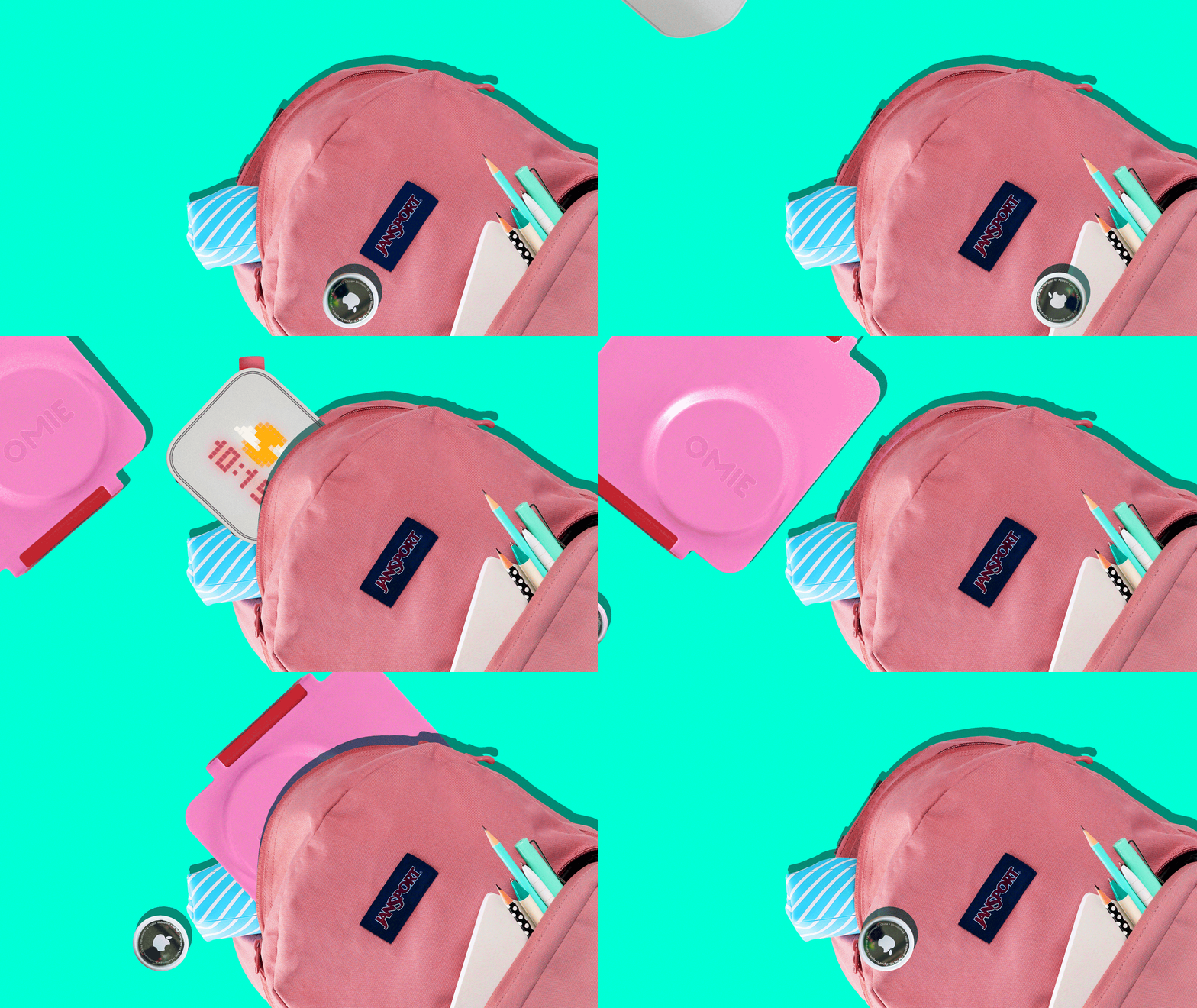
Education Meets Insulation: Bento Boxes, Smartwatches and Other Back-to-School Buys
With school starting in the coming weeks, Annie asked Silicon Valley parents for their must-have back-to-school swag. Low-tech tech seems to be this year’s theme, from audio players to educational games.
Reading: The chilling reality behind spam texts
Odds are you’ve gotten one of these texts in the last year: An unknown number says a friendly hello, but gets your name wrong and references some event you had nothing to do with. These ridiculous-seeming messages are in fact a portal to so-called “pig butchering scams,” in which texters lure unwitting victims into online romances and trick them into forking over their savings in cryptocurrency. Apparently $10 billion has been lost to this type of fraud. But the person on the other end of the spam is probably a victim too: This week’s Businessweek cover story (an excerpt from Zeke Faux’s forthcoming book “Number Go Up: Inside Crypto’s Wild Rise and Staggering Fall”) unravels the unfathomably dark backstory, which traces back to human trafficking rings in Cambodia and Myanmar. The people sending those texts are allegedly being held captive, beaten, starved and sometimes killed. And the Chinese gangsters behind it all have been evading capture thanks to the anonymity granted by crypto exchanges like ZBXS and untraceable cryptocurrencies like Tether. —Julia
Watching: The greatest horror film never made
Remember the cult classic slasher film “Zepotha”? No? Maybe because it’s fake, the warped creation of TikToker Emily Jeffri, who urged her followers to play along. “We can convince thousands of people that this weirdly titled 80s horror film actually exists,” she wrote. The TikTokers then mobilized, spamming comment sections with exclamations like, “You remind me so much of Cole from Zepotha!” The trend was peak gaslighting, with the #Zepotha hashtag garnering over 160 million views in the last five days. It’s not the first time TikTok has spawned an intricate, crowd-sourced, mass hallucination—recall last November, when TikTokers created a fake economic system built on “dabloons.” But generative AI has taken the fake flick’s lore to the next level. Users have posted hyper-realistic movie posters, AI-generated pictures of the film’s “cast” and Zepotha-themed TikTok filters. We all know what comes next: someone in Hollywood buys the rights to “Zepotha,” and turns it into a real cult classic after all. —Margaux
Noticing: A TikTok-fueled college dorm spending boom
Dorm essentials used to amount to some bedding and maybe a desk lamp, probably from Target. Now students are showing up to campus with bespoke furniture, designer linens, neon signs and color coordinated settees. According to CNBC, household spending on back-to-college purchases has shot up by 40% since 2019 to about $1,367 per student. Blame TikTok, where dorm transformations have become a hit genre. Take this pink floral TCU dorm, with wallpaper and West Elm-style furniture. Or this double at the University of Alabama, basically unrecognizable from its original state and featuring custom signs lit up with each roommate’s name. Or this dorm at the University of Tennessee, Knoxville, where the students hung framed photos of their families wearing matching outfits. So, if you have a kid heading to college this fall, prepare for sticker shock…and maybe a professional photo shoot. —Annie
Makes You Think
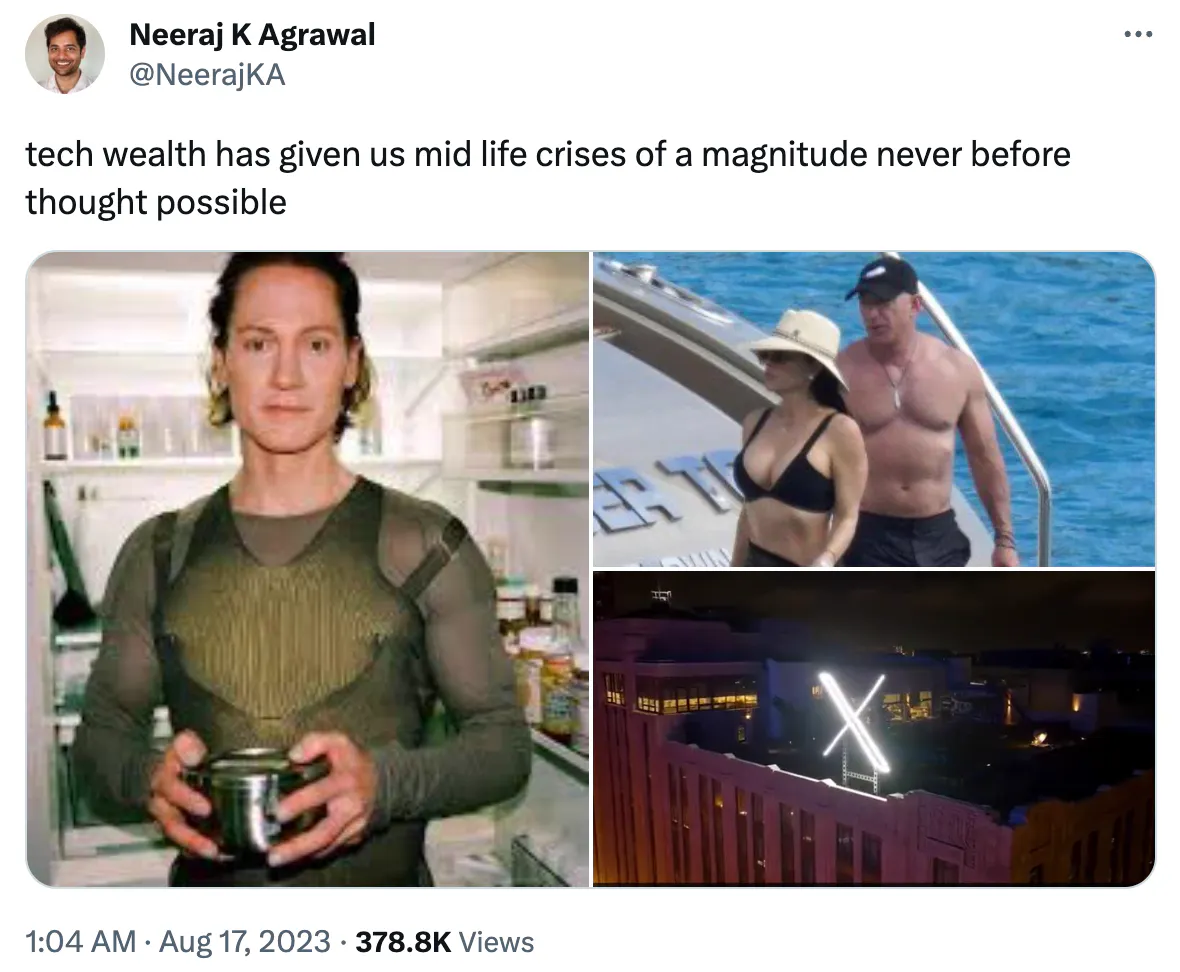
Guys, therapy is a lot cheaper.
Until next Weekend, thanks for reading.
—Jon
Weekend Editor, The Information



0 Commentaires