Today at noon ET: The Electric Presents: Making the Forever Battery. In my second Live Chat, I'm delighted to welcome Sila Nanotechnologies CEO Gene Berdichevsky, who has news he wants to break. For a decade and a half, Berdichevsky has helped lead development of some of the world’s most important commercial batteries. RSVP here. (No subscription required.)
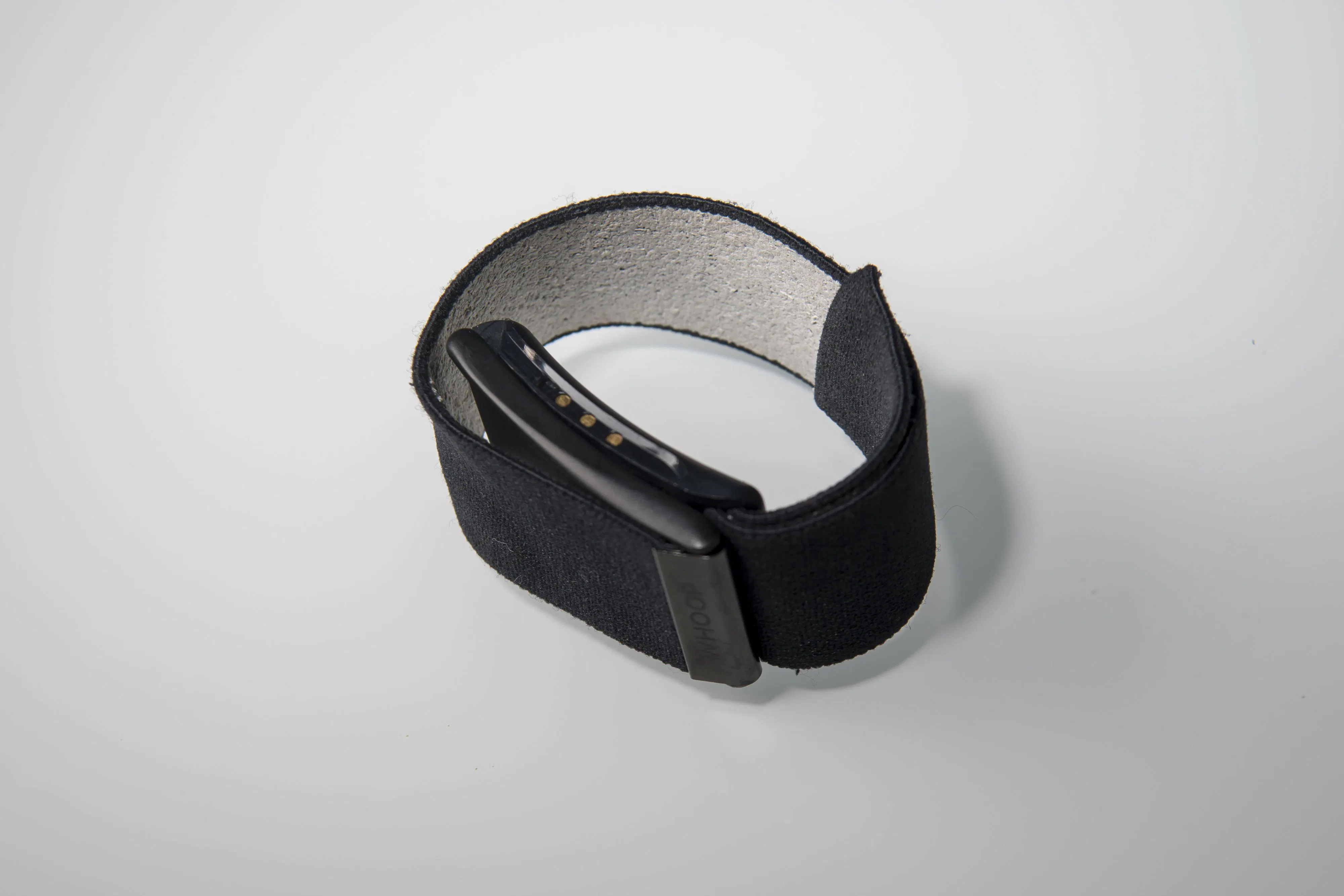
A new battery technology rolled out today in a smartwatch from Whoop has the potential to transform the electric-vehicle market within years, producing mass-market SUVs, pickups and sedans with standard driving ranges of 400 miles and more Whoop, the wearable fitness tracking company, said it is the first to feature a lithium-ion battery containing a significant dollop of silicon, an element that boosts battery energy by 20% to 40%.
The commercialization of the silicon carbon anode, made by BMW- and Daimler-backed Sila Nano Technologies, based in Alameda, Calif., marks the coming of age of higher-performing consumer products from smartwatches to smartphones and eventually EVs. Because Whoop replaced its graphite anode with one containing 25% silicon, its 4.0 version can calculate a wearer’s blood oxygen, skin temperature, heart rate and respiratory rate, all new features, said Whoop CTO John Capodilupo. Like the 3.0, the new Whoop lasts five days before it needs to be recharged, he said.
“All wearables come down to battery life and what you can power,” Capodilupo told me. “The short of it is that it works.” Last month, Whoop raised $200 million in venture funding at a $3.6 billion valuation.
The technology follows a decade of promises, false starts and spectacular collapses in the effort to devise the higher-energy batteries needed to power the next-generation of EVs. While driving distances have improved—a standard-range Tesla can go more than 250 miles, versus the 2011 Nissan Leaf, which went about 75 miles on a charge—EV makers want batteries that give them the flexibility to drop stickerprices to low, mass-market levels, make an SUV that goes 500 miles, or somewhere in between.
That means improving battery physics. At a theoretical level, silicon atoms are able to hold about 10 times the number of electrons as graphite, thus allowing far more energy-producing lithium to shuttle within the battery. In practice, silicon’s performance has been somewhat less than its textbook description, but still much better than graphite.
The arrival of the silicon anode is the first major commercial change in the construct of the lithium-ion battery since it was commercialized three decades ago by Sony. From the first, the battery was a layered metal cathode and a graphite anode, between which lithium ions shuttle in the charge-discharge cycle, creating the electricity that has enabled the era of mobile devices. Though the precise makeup of the cathode has expanded to feature different metals, the battery’s basic architecture has remained the same, with graphite as the unchanging mainstay.
Back in the late-2000s, when Tesla began to produce its electric model Roadster, researchers were already chafing for a better battery. Inventors proposed an array of new compositions and architectures, among them the “air” battery and the “flow” battery, and different metals like sodium, zinc, aluminum and sulfur. None of these panned out, mainly because they didn’t produce the painstaking performance in electrochemical stability, range, price and cycle life demanded by EV makers, nor fulfill the separate needs of power utilities.
But two ideas stuck and have occupied the minds of the battery community ever since: the pure lithium-metal battery—and, right next to it, the silicon-based battery. Both would significantly increase the energy in a battery, and every commercially important next-generation battery company around the world is attempting to optimize one or the other technology, and sometimes both. There is a broad consensus that EVs containing both technologies will be on the market by the end of the decade.
Gene Berdichevsky, an early employee at Tesla in the early 2000s, co-founded Sila Nano in 2011. In an interview, he said that over the years, his team has tried more than 55,000 iterations of the anode. “Some of the challenges we didn’t even expect,” Berdichevsky said. “As you get further and further nearer the finish line, you think you’re on the 1-yard line and you’re actually on your own 1-yard line.”
Sila Nano isn’t the first to get silicon into an anode. For several years, Panasonic has sprinkled minute percentages of the element into the batteries it sells to Tesla, and Chinese battery makers are believed to do the same with their EV batteries. The challenge, however, has been to spoon in large quantities of silicon, eventually reaching half and even 100% of the anode.
The difficulty is that when it interacts with the lithium, silicon expands up to four times its original size. When that happens, it can pulverize the battery. Sila’s achievement has been to figure out how to accommodate the expansion and then get it into a product before its rivals. Berdichevsky won’t go into detail on how his team resolved the problem but, generally speaking, Sila constructed a porous composite of silicon and carbon and embedded it into an outer layer. When the lithium and silicon come into contact, the expansion and contraction are contained within the hard layer.
Berdichevsky said the version of the anode in the Whoop can charge and recharge more than 500 times, sufficient to last five years of typical daily use. He has said that later versions will be ready by mid-decade should they be wanted by BMW and Daimler. Both car makers are investors in his company but also have put bets down on other battery technologies.
About The Electric
An exclusive premium service covering the nascent battery and electric vehicle revolutions.
About Steve LeVine
Steve LeVine is editor of The Electric. Previously, he worked at Axios, Quartz and Medium, and before that The Wall Street Journal and The New York Times. He is the author of The Powerhouse: America, China and the Great Battery War, and is on Twitter @stevelevine


0 Commentaires