Hi, welcome to your Weekend.
Culturally, it’s been a very Barbie-Taylor-Tom (Cruise) summer. A season of mega-popular, mega-lucrative, four-quadrant entertainments that have returned us, however briefly, to the pre-internet days of the monoculture.
So imagine my surprise when the online discourse shifted abruptly this week to the very niche topic of LK-99, the supposedly miraculous superconductive material created by physicists in South Korea. Julia writes more about the phenomenon in our Recommendations below, but I just wanted to say: Welcome to the party, LK-99.
Peter Thiel was right when he lamented that we were promised flying cars, and only got 140 characters. Potential breakthroughs like LK-99 are what people in tech actually want to obsess about, rather than the latest decentralized social media app, or the newest dumb scandal in crypto. Real innovation, fueled by real science, leading to untold possibilities—please, science, give us more floating rocks!
Now, the experts will have to confirm that the LK-99 discovery is replicable. So far, the results aren’t terribly promising: “My first impression was ‘no,’” said one physicist to “Nature.” But even for a moment, the story offered a reprieve from non-stop Barbie, Taylor, Tom and Elon. It was a refreshingly nerdy tonic for the dog days.
Now onto our stories...
the big read
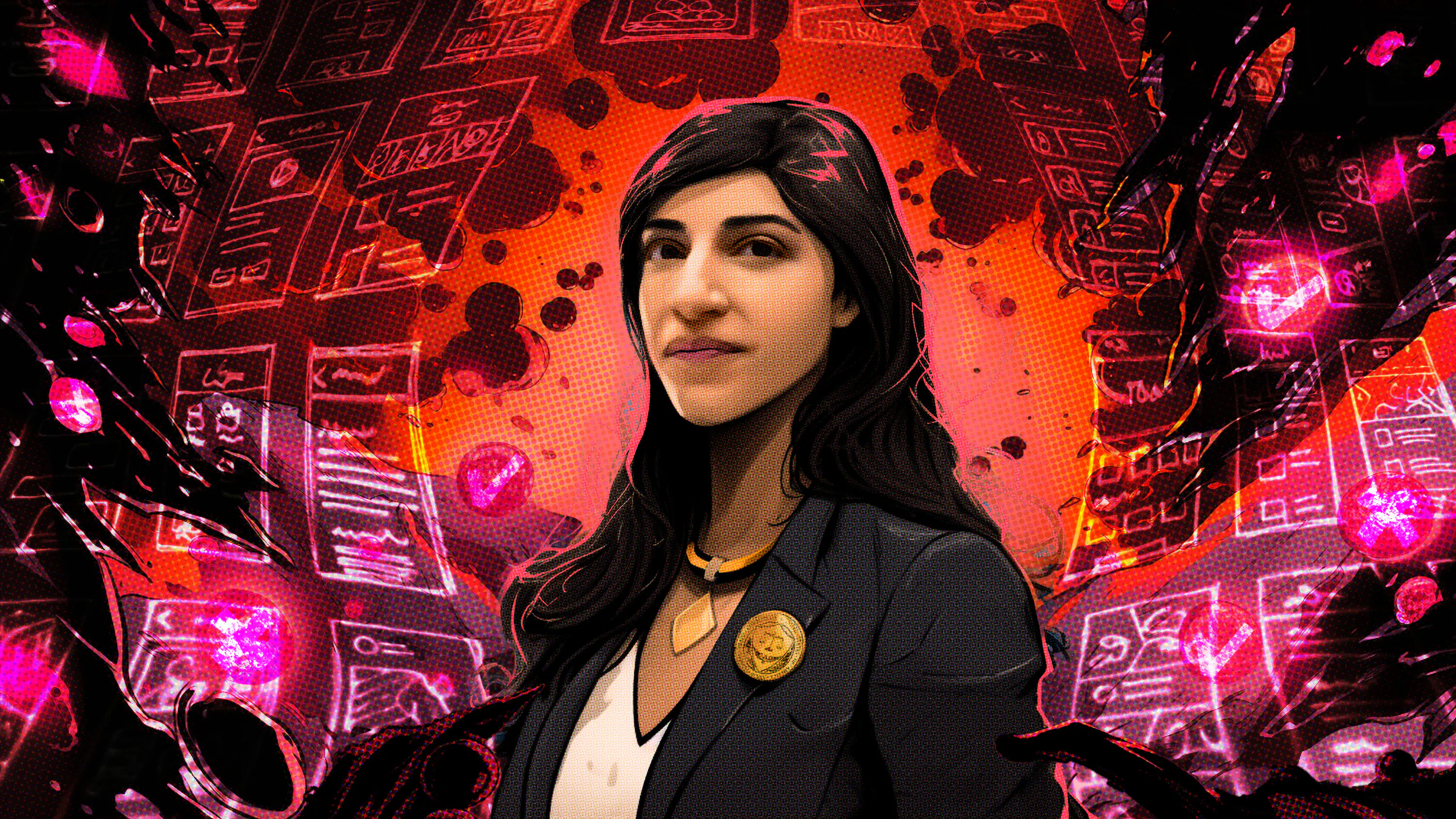
Lina vs. the Dark Arts: The FTC Wants Big Tech to Know It’s Watching
Lina Khan, chair of the Federal Trade Commission, and her gang of enforcers have pounced on “dark patterns” at Amazon and other tech firms—and critics are again claiming overreach. Nancy Scola breaks down Khan’s fight against what she sees as tech companies’ psychological trickery and her plan to bring the giants to heel.
the 1:1
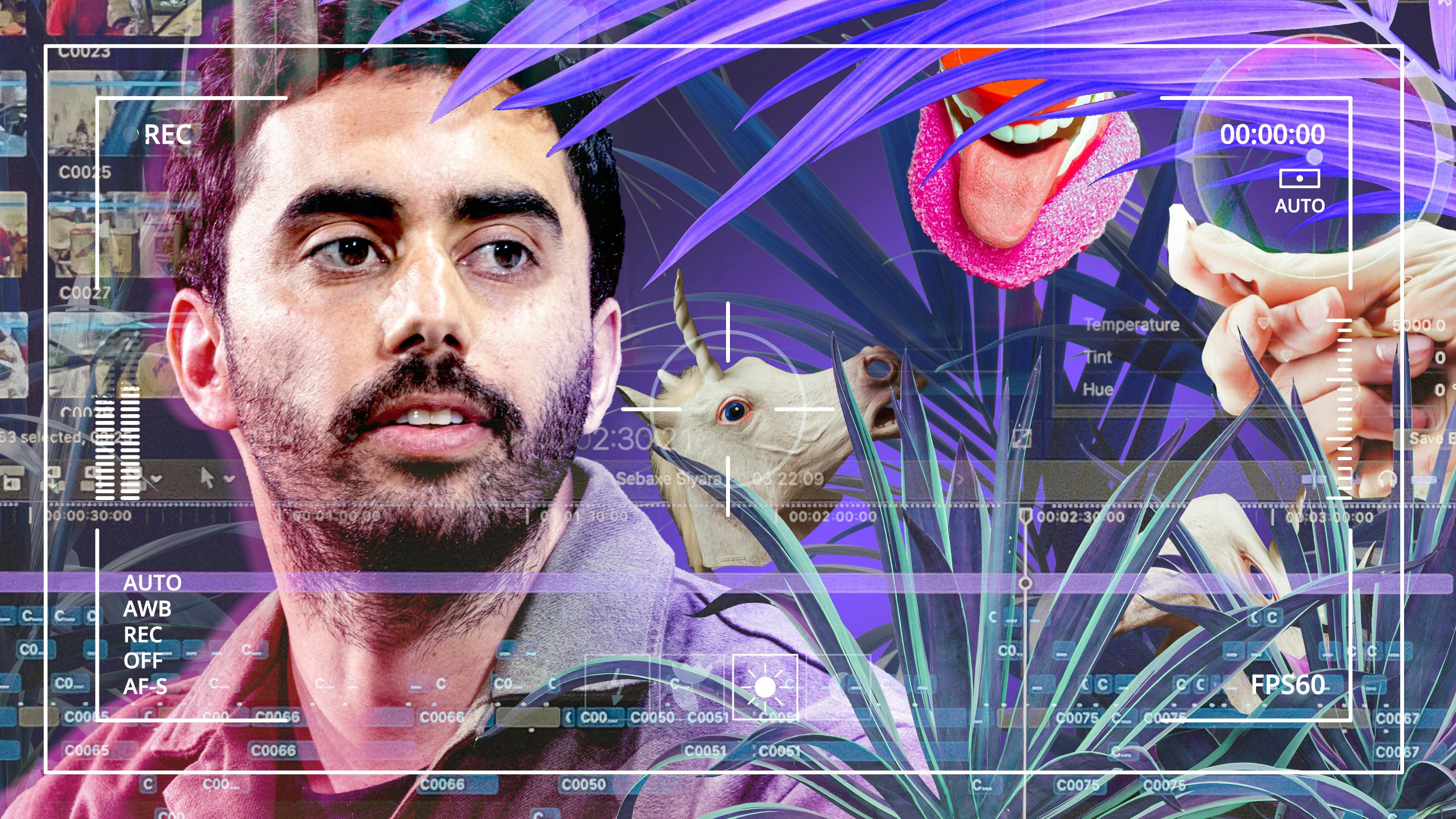
‘Not Everyone Is Trying to Build God’: Runway CEO Cristóbal Valenzuela Tries to Dampen the Doomerism
In her first story for The Information, reporter Julia Black speaks to Cristóbal Valenzuela, the 33-year-old founder of Runway, the AI video startup valued at $1.5 billion. Pushing back on the anxieties of strike-era Hollywood, Valenzuela maintains that Runway will soon become a co-pilot—not a replacement—for filmmakers.
lessin’s lessons
‘Fix It—or Go Surfing’: Jessica Lessin on What She’d Tell Her Younger Self
Ten years after founding The Information, the tech journalist–CEO (and our boss) contemplates everything she wishes she’d known from the start.

Noticing: The science project that broke the Internet
Last week, reports emerged that three South Korean physicists had created a superconductor called LK-99 that works at room temperature and ambient pressure. The invention promised nothing less than a bountiful future of efficient energy, levitating transportation, advances in quantum computing and everlasting world peace. This week, tracking the alleged breakthrough on X became a live sporting event for nerds. Scientists raced to replicate the results, Korean and Chinese tech stocks rallied and “LK-99” just kept trending. But the soundness of the science has quickly come under question. The story is intriguing not only because of the massive significance of the claims, but because it illustrates how hard it is to believe anything anymore. For now, we’ll file under: “Huge if true.” —Julia
Watching: The French restore an icon
Le terminus de l’horreur! It’s been four years since Paris’s famed Notre Dame cathedral was partially destroyed in a fire. But, incredibly, the church’s 19th century spire is on the mend. CBS News went behind the scenes into the construction of the new spire, led by the absolutely delightful, straight out of central casting French Army General Jean-Louis Georgelin. Comparing his team’s methods to the original builders’ ingenuity, Georgelin remarked, “We have probably less genius, but more calculation. More certainty by using computers.” The team is using the 19th century plans from architect Eugene Viollet-le-Duc, along with century-old timber, to create a spire as true to the original as possible. Start booking your Air France tickets—the cathedral is set to fully reopen to the public in 2024. —Annie
Following: Why some phones are cocaine, some are kale
The new fad is cocaine and kale. No, not drugs and vegetables; this diet is all about screens. Substack writer Trung Phan introduced us to “The Cocaine Kale Phone Protocol,” the latest way to cure smartphone addiction. (Phan borrowed the theory from another newsletter writer, George Mack.) Most viral “dopamine detoxes” involve forgoing screentime—a near impossible task when you need your phone for communication, navigation or work. But this protocol actually involves two phones: one loaded with your “cocaine” apps, like TikTok, Twitter (fine, X) and Instagram, and one stuffed with nutritious “kale” apps, like Kindle, Maps and Uber. Phan, who tried the protocol for two weeks, had access to his kale phone anytime and only used his cocaine phone in limited windows. He said the dopamine-addled phone actually started to feel “too intense,” and he began to crave his “healthy” phone. “How do I know it worked wonders?” he wrote of the protocol. “Because I was able to sit down and finish a book in one day for the first time in ages.” —Margaux
Makes You Think
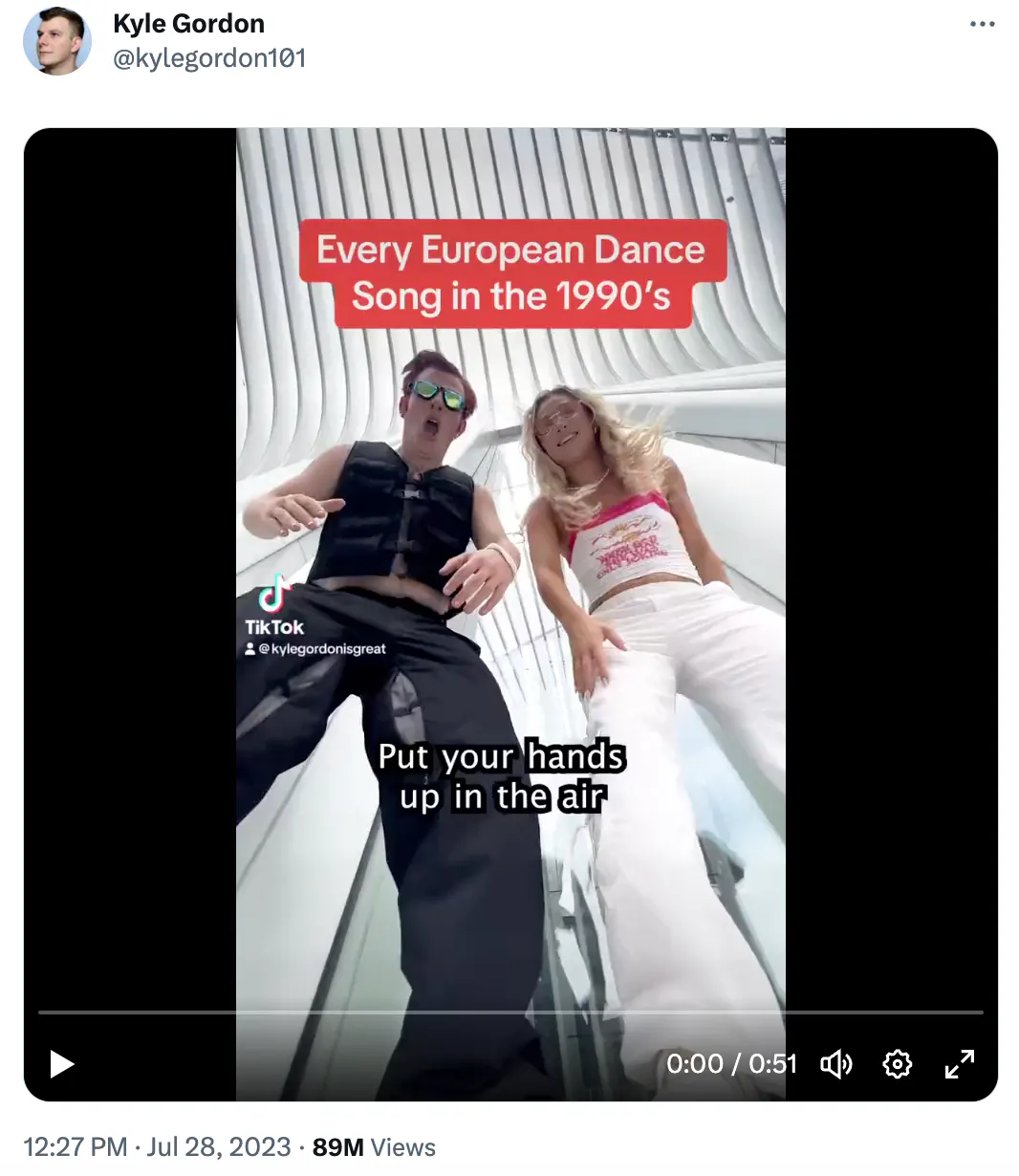
Thank you, TikTok, for the true song of the summer.
Until next Weekend, thanks for reading.
—Jon
Weekend Editor, The Information




0 Commentaires